
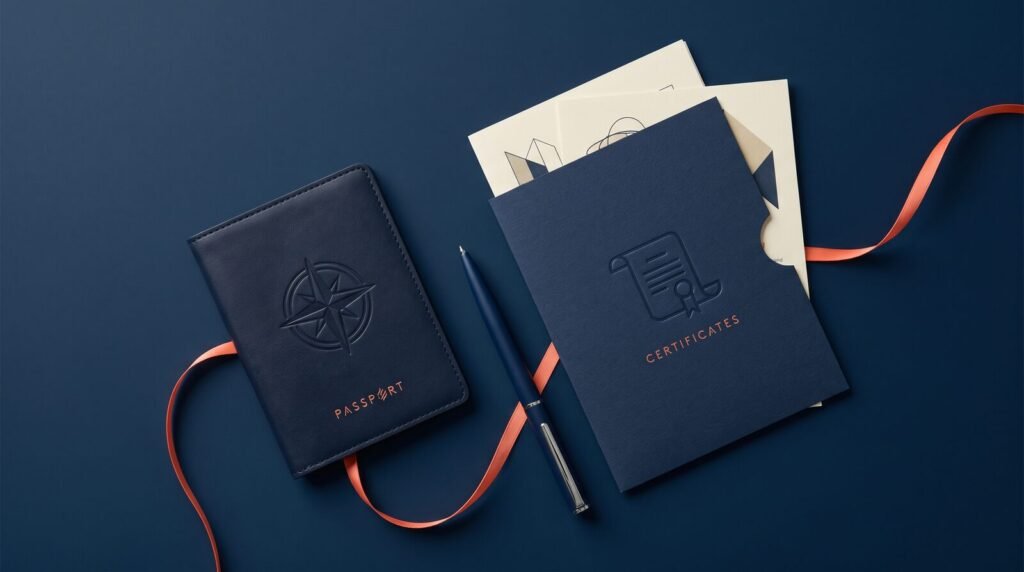
Most delays in overseas recruitment have nothing to do with skills or interviews — they come down to paperwork. A missing attestation stamp, an expired passport, or a medical report from the wrong clinic can push your departure back by weeks. Here’s exactly what you need to have ready before you apply for a Gulf work visa, and why each document matters.
The core document set
Every Gulf destination has its own small variations, but the foundation is the same across Saudi Arabia, the UAE, Qatar, Oman, Kuwait and Bahrain:
- Valid passport — with at least six months’ validity remaining from your travel date. A passport close to expiry is one of the most common reasons an application stalls.
- CNIC — original plus clear photocopies.
- Passport-size photographs — to the specification of the destination country, not a generic size.
- Educational and trade certificates — attested through the correct channel: HEC for degrees, IBCC for matric/intermediate, and the relevant trade testing board for skilled trades. Unattested certificates are routinely rejected.
- Experience certificates from previous employers — especially valuable for tradesmen and technical roles, where they can directly affect the salary grade you’re offered.
- Signed employment contract — one that matches both Pakistani regulatory standards and the destination country’s requirements, with your role, salary and terms clearly stated.
Medical fitness
Almost every Gulf country requires a medical fitness certificate before a visa is issued, and for most GCC destinations that means testing at a GAMCA-approved medical centre specifically — not just any hospital or clinic. The examination generally checks general fitness, communicable diseases and physical capacity for the role you’re being placed in. A report from a centre that isn’t GAMCA-approved is one of the fastest ways to lose weeks: it simply won’t be accepted, and you’ll have to test again at an approved centre from scratch.
Police character certificate
A clear police character certificate is required to confirm you have no outstanding criminal record. It’s a standard part of the background verification every Gulf employer and embassy expects, and it’s worth applying for early since it can take longer to process than candidates expect.
Emigration registration (“Protector”)
If you’re travelling on a work visa specifically — not a visit, business or tourist visa — Pakistani nationals also need emigration clearance through the Bureau of Emigration & Overseas Employment, commonly known as Protector registration. This step exists to protect workers: it’s a formal record that your contract and documents have been checked before you leave the country. If you’re going through a licensed Overseas Employment Promoter like Reliance HR, this step is handled on your behalf as part of our process rather than something you have to navigate alone.
Quick pre-departure checklist
- Passport valid 6+ months
- CNIC (original + copies)
- Passport-size photographs
- Attested educational/trade certificates
- Experience certificates (if applicable)
- Signed employment contract
- GAMCA medical fitness certificate
- Police character certificate
- Protector / emigration registration
Getting all of this right on the first attempt is exactly what our documentation team does for every candidate — it’s built into our 12-step recruitment process, so you’re not left guessing which certificate needs attesting or which clinic is actually approved. If you’re ready to start, browse current openings or get in touch and we’ll walk you through what you personally need.